

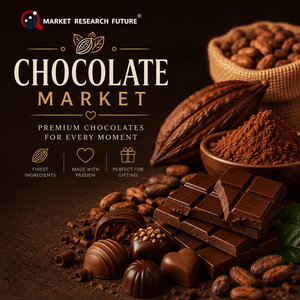
The global chocolate industry continues to evolve as a dynamic segment within the broader confectionery landscape, supported by changing consumer preferences, innovation in product development, and expanding global distribution channels. According to Chocolate industry growth insights, the chocolate market was valued at USD 121.32 billion in 2025 and is projected to grow from USD 127.18 billion in 2026 to USD 197.85 billion by 2035, registering a compound annual growth rate (CAGR) of 5.38%. This upward trajectory reflects a shift toward premium, health-oriented, and sustainably sourced chocolate products across both developed and emerging economies.
Latest Trends Shaping the Chocolate Market
A key trend influencing the chocolate market is premiumization, where consumers increasingly prefer high-quality, artisanal, and origin-specific chocolates. This shift is particularly evident in urban markets where disposable incomes are rising, enabling consumers to trade up from mass-produced products to specialty offerings. Additionally, the demand for dark chocolate has surged due to its perceived health benefits, including antioxidant properties and cardiovascular advantages.
Another notable trend is the emergence of clean-label and ethically sourced chocolate. Consumers are becoming more conscious of sustainability, pushing manufacturers to adopt fair-trade cocoa sourcing, transparent supply chains, and environmentally responsible production practices. Vegan and plant-based chocolates are also gaining traction, driven by dietary shifts and increased awareness of lactose intolerance and animal welfare.
Technological innovation is further reshaping the market. The development of alternative chocolate production methods, including lab-grown cocoa, is being explored as a potential solution to supply chain volatility and climate-related challenges. This innovation is expected to complement traditional chocolate production while improving consistency and reducing environmental impact.
E-commerce and digital retail channels are also expanding rapidly, enabling brands to reach a broader audience and offer personalized chocolate products. Subscription-based chocolate boxes and curated assortments are enhancing consumer engagement and brand loyalty.
Recent Developments
- January 2026: Leading chocolate manufacturers intensified investments in premium and organic chocolate lines to cater to growing consumer demand for healthier indulgence options.
- March 2026: Major industry players expanded their online retail presence, launching direct-to-consumer platforms to strengthen digital sales channels.
- June 2026: Companies initiated research into sustainable cocoa alternatives and lab-grown chocolate to address supply chain disruptions and environmental concerns.
- September 2025: Several global brands introduced limited-edition and seasonal chocolate collections to capitalize on gifting trends and festive demand cycles.
- December 2025: Strategic collaborations between chocolate producers and cocoa suppliers were strengthened to ensure ethical sourcing and long-term supply stability.
Request for Sample PDF Copy: https://www.marketresearchfuture.com/reports/chocolate-market-10947
Top Company Profiles
The chocolate market is highly competitive and dominated by a mix of global conglomerates and regional players. Key companies are focusing on product innovation, mergers and acquisitions, and sustainability initiatives to maintain their competitive edge.
- Nestlé S.A.: A global leader in the food and beverage sector, Nestlé offers a diverse portfolio of chocolate brands and emphasizes sustainability and product innovation.
- Mars, Incorporated: Known for its iconic confectionery products, Mars continues to expand its premium chocolate offerings and invest in sustainable cocoa sourcing.
- Mondelez International, Inc.: A major player with a strong global presence, Mondelez focuses on brand expansion and innovation in premium and snackable chocolate formats.
- The Hershey Company: Hershey is a leading chocolate manufacturer in North America, leveraging strong distribution networks and product diversification strategies.
- Ferrero Group: Renowned for its premium chocolate products, Ferrero emphasizes quality, innovation, and global expansion.
- Barry Callebaut: A key supplier of high-quality cocoa and chocolate products, Barry Callebaut supports industrial and artisanal chocolate manufacturers worldwide.
- Chocoladefabriken Lindt & Sprüngli AG: Specializes in premium chocolate products and continues to expand its global retail footprint.
- Arcor Group and Meiji Holdings Co., Ltd.: Regional players contributing significantly to market growth through localized product offerings and distribution strategies.
Regional Analysis
From a regional perspective, Europe holds a dominant position in the global chocolate market, driven by high per capita consumption, strong cultural affinity for chocolate, and the presence of established manufacturers. Countries such as Switzerland, Germany, and the United Kingdom play a significant role in shaping market trends.
North America represents another key market, characterized by strong demand for premium, organic, and functional chocolates. The United States, in particular, is a major contributor due to its large consumer base and advanced retail infrastructure.
The Asia-Pacific region is expected to witness the fastest growth during the forecast period. Rising disposable incomes, urbanization, and increasing exposure to Western consumption patterns are driving chocolate demand in countries such as China and India.
Latin America and the Middle East & Africa are emerging markets with significant growth potential. These regions benefit from expanding retail networks, growing middle-class populations, and increasing awareness of chocolate products.
Segment Analysis
The chocolate market is segmented based on product type, distribution channel, and other key factors, each contributing uniquely to overall growth.
By product type, milk chocolate continues to dominate the market due to its widespread appeal and affordability. However, dark chocolate is gaining significant traction owing to its health benefits and premium positioning. White chocolate and emerging variants such as ruby chocolate are also contributing to product diversification.
In terms of distribution channels, supermarkets and hypermarkets hold the largest market share, offering a wide range of chocolate products and convenient shopping experiences. Convenience stores and specialty stores also play a crucial role in impulse purchases and premium product sales. Meanwhile, online retail is rapidly expanding, driven by the growth of e-commerce platforms and changing consumer shopping behavior.
Based on formulation, chocolate bars represent the largest segment due to their portability and popularity as an everyday snack. Other formats such as boxed chocolates, truffles, and chocolate chips cater to gifting and baking applications.
From an end-use perspective, the confectionery segment dominates the market, followed by bakery and beverage applications. The versatility of chocolate as an ingredient continues to drive its adoption across multiple food categories.
Conclusion
The global chocolate market is poised for sustained growth, underpinned by evolving consumer preferences, technological advancements, and expanding distribution channels. The shift toward premium, health-oriented, and sustainable chocolate products is reshaping the competitive landscape, encouraging manufacturers to innovate and differentiate their offerings.
As the market progresses toward 2035, companies that prioritize sustainability, digital transformation, and product innovation will be best positioned to capitalize on emerging opportunities. With a projected CAGR of 5.38%, the chocolate industry remains a resilient and lucrative segment within the global food and beverage sector, offering significant potential for long-term growth and investment.
Browse More Reports:
Disclaimer: The iCrowdNewswire provides distribution services for Research Marketing reports, however, it does not assume any responsibility for the content (facts, opinions, photos, or any other part of it) of the reports. All responsibility of the content is with the publisher of the report.
Contact Information:
Market Research Future
Email: sales@marketresearchfuture.com
Phone: +1 (855) 661-4441
Tags:
Research Newswire, English