

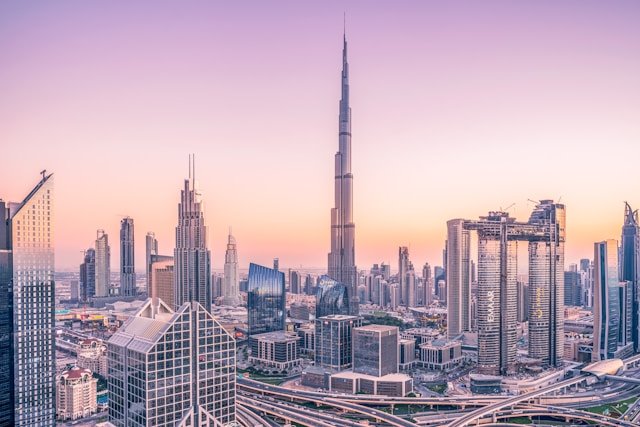
United Arab Emirates Business Guide Regional Hub and Global Trade
Global business insights and market intelligence.
Overview
The UAE is a federation of seven emirates, recognized for transforming from a primarily oil-dependent economy into a global business and logistics powerhouse. With strategic geographic location between Asia, Europe, and Africa, the country serves as a critical nexus for regional and international trade. Investment in world-class infrastructure, free zones, and business-friendly reforms has attracted multinational corporations and startups alike. Moreover, the UAE’s Vision 2021 and subsequent strategic plans focus on sustainable economic diversification emphasizing knowledge-based industries.
The business environment in the UAE favors innovation, foreign ownership rights, and minimal taxation, making it a preferred destination for investors. Its political stability and strong legal framework provide confidence for long-term business operations. This combination of factors positions the UAE as an essential market for global businesses targeting the Middle East and North Africa (MENA) region.
Key Data
| Attribute | Details |
|---|---|
| Population | Approx. 10 million (2024) |
| GDP (Nominal) | $500 billion USD (2023 est.) |
| Currency | United Arab Emirates Dirham (AED) |
| Main Industries | Energy, construction, trade and logistics, tourism, financial services, real estate, technology, manufacturing |
Business Opportunities
- Energy Sector: While oil and gas remain significant, the UAE is a global leader in renewable energy projects, including solar and nuclear. Government initiatives drive public-private partnerships to develop sustainable energy solutions.
- Trade and Logistics: The country boasts some of the world’s busiest ports and airports, such as Jebel Ali Port and Dubai International Airport, facilitating seamless access to over two billion consumers across emerging markets.
- Technology and Innovation: UAE is aggressively investing in AI, blockchain, fintech, and smart city solutions, supported by robust government programs and innovation hubs like Dubai Silicon Oasis and Abu Dhabi’s Hub71.
- Tourism and Hospitality: Leveraging its luxury and cultural attractions, the UAE continues to expand its hospitality sector, with Expo 2020 Dubai boosting tourism inflows and creating diverse business prospects.
- Financial Services: Dubai International Financial Centre (DIFC) and Abu Dhabi Global Market (ADGM) position the UAE as a regional financial hub, offering a transparent regulatory framework and enabling access to capital markets.
- Real Estate and Construction: Driven by urban development and infrastructure projects, opportunities persist in residential, commercial, and industrial real estate, especially within free zones and smart communities.
- Market Entry Strategies: Establishing presence in UAE free zones allows 100% foreign ownership, zero corporate tax, and full repatriation of profits. Alternatively, mainland companies can benefit from direct access to the UAE’s domestic market but require a local sponsor or partner.
Legal Considerations
Understanding the UAE’s legal landscape is vital for effective market entry and operation. Key legal facets include:
- Ownership Laws: Recent reforms allow 100% foreign ownership in many sectors outside free zones, but specific industries still require local partnership.
- Commercial Licensing: Business activities mandate appropriate licenses issued by government authorities or free zone regulators, with clear categorization based on business type.
- Labour Laws: UAE offers a modern labor framework focusing on workers’ rights and employer obligations, with temporary and unlimited contract types, and considerations for sponsorship and visa arrangements.
- Dispute Resolution: The UAE provides robust arbitration frameworks through Dubai International Arbitration Centre (DIAC) and other entities, offering internationally recognized dispute mechanisms.
- Intellectual Property: Comprehensive IP laws protect trademarks, patents, copyrights, and trade secrets, essential for companies engaging in technology and innovation sectors.
Practical Recommendations
- Leverage Free Zones: Utilize specialized free zones aligned with your industry to gain fiscal advantages, streamlined procedures, and sector-specific ecosystems.
- Engage Local Experts: Collaborate with legal advisors and business consultants versed in UAE’s regulatory environment to mitigate risks and navigate bureaucracy efficiently.
- Understand Cultural Nuances: Develop awareness around Emirati business customs, negotiation styles, and relationship-building to establish trust and long-term partnerships.
- Focus on Compliance: Maintain rigorous adherence to visa, licensing, taxation, and labor regulations to avoid penalties and operational disruptions.
- Monitor Market Trends: Stay updated with economic diversification efforts, evolving regulatory reforms, and sectoral growth forecasts to identify niche opportunities.
- Capitalize on Innovation Initiatives: Engage with government programs promoting technology adoption and sustainability to benefit from funding, facilitation, and network access.
Frequently Asked Questions
What are the key advantages of setting up a business in UAE free zones?
UAE free zones offer 100% foreign ownership, zero corporate and income taxes, full repatriation of capital and profits, no customs duties for goods entering or leaving the zone, and simplified administrative processes. They provide sector-focused ecosystems that foster growth and networking.
Is it mandatory to have a local sponsor for business operations in the UAE mainland?
While traditional law required a UAE national sponsor owning 51% of most mainland companies, recent reforms allow full foreign ownership in many sectors. However, some industries still mandate a local partner. It is essential to confirm sector-specific regulations before proceeding.
How does the UAE support foreign investors regarding taxation?
The UAE has a favorable tax regime with no federal corporate tax for most businesses (to be introduced at a low rate from mid-2023 for large businesses), no personal income tax, and numerous double taxation avoidance agreements. This environment supports cost effectiveness and competitiveness.
What industries offer the most promising growth prospects in the UAE?
Beyond traditional hydrocarbons, sectors such as renewable energy, technology (AI, fintech, blockchain), logistics, healthcare, tourism, and financial services demonstrate robust growth driven by government initiatives and global trends.