

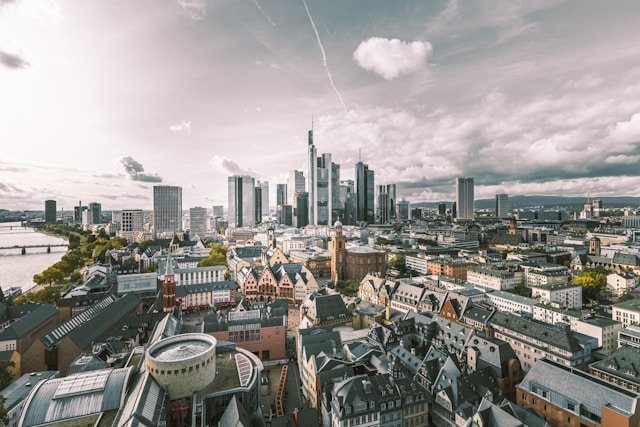
Germany Business Guide Industrial Strength and Export Opportunities
Global business insights and market intelligence.
Overview
Germany’s economy is notable for its resilience, innovation, and global integration. As the fourth-largest economy worldwide by nominal GDP, Germany leverages a highly skilled workforce, advanced manufacturing capabilities, and a dense network of small and medium-sized enterprises (SMEs), often referred to as the “Mittelstand.” Its position as a global export powerhouse is supported by its leadership in automotive engineering, chemical production, machinery, and renewable energy technology. From a global business perspective, Germany offers a stable legal framework, strong intellectual property protections, and access to the EU single market, making it an attractive hub for manufacturing, research, and trade.
The country’s economic health is underpinned by export revenues that account for roughly half of its GDP, with major trading partners including China, the United States, and other EU members. The German government continues to emphasize digital transformation and sustainable industrial policies, aligning with broader EU directives on climate goals and digital innovation. Businesses considering entry should be prepared for high-quality standards, competitive local players, and a complex regulatory environment.
Key Data
| Attribute | Details |
|---|---|
| Population | 83 million (2024 estimate) |
| GDP (Nominal) | Approx. $4.5 trillion (2023) |
| Currency | Euro (€) |
| Main Industries | Automotive, Machinery & Equipment, Chemicals & Pharmaceuticals, Electrical Engineering, Renewable Energy, Information Technology, Financial Services |
Business Opportunities
- Manufacturing and Automotive: Germany’s automotive sector, home to global brands such as Volkswagen, BMW, and Daimler, continues to expand into electric vehicles (EVs) and autonomous driving technologies, presenting opportunities for suppliers and high-tech component manufacturers.
- Renewable Energy and Sustainability: The Energiewende initiative drives demand for innovative solutions in wind, solar, and hydrogen technologies, alongside energy efficiency services, positioning Germany as a fertile ground for green investments.
- Digital Transformation and Industry 4.0: With government-backed initiatives, there is substantial growth in IoT, automation, artificial intelligence, and smart manufacturing, especially within the Mittelstand, which opens avenues for technology providers and system integrators.
- Pharmaceuticals and Chemicals: Strong R&D infrastructure supports significant opportunities in biotech, specialty chemicals, and healthcare products, enhanced by collaborations between industry and research institutes.
- Market Entry through Strategic Partnerships: Collaborating with local SMEs or establishing joint ventures can facilitate market access, given Germany’s preference for business relationships built on trust and compliance.
Frequently Asked Questions
What are the critical regulatory considerations when entering the German market?
Compliance with EU regulations, strict labor laws, data protection (GDPR), and environmental standards are essential. Companies should also be aware of intellectual property protections and certification requirements, particularly for industrial products.
How important is localization for business success in Germany?
Localization is vital due to cultural preferences and regulatory nuances. This includes utilizing the German language in communications, adapting products to meet local standards, and understanding business etiquette to build sustainable partnerships.
What market entry strategies are most effective for foreign companies?
Establishing a local subsidiary, forming joint ventures, or partnering with Mittelstand companies can ease market penetration. Attending trade fairs and leveraging government support programs like Germany Trade & Invest (GTAI) can also accelerate market entry.